Clogged gutter damage can affect the roof edge, fascia, soffits, walls, and foundation. Leaves and dirt block water flow, so rain spills into places it should not. Cleaning may solve a new blockage, but soft wood, leaks, stains, and loose parts may need repair. This guide explains what to check and when to call for help in Sugar Land.
Table of Contents
- How does clogged gutter damage affect the roof edge?
- What happens to fascia when gutters stay blocked?
- How do clogged gutters damage soffits and eaves?
- Can clogged gutters cause leaks inside the home?
- Can overflowing gutters cause foundation water problems?
- What other problems can clogged gutters create?
- How can homeowners prevent clogged gutter damage?
- Frequently Asked Questions
How does clogged gutter damage affect the roof edge?
Clogged gutters can harm the roof edge because water spills where the roof, gutter, fascia, and soffit meet. Rain may run behind the gutter or over its front edge. This repeated wetting can harm wood, roof layers, paint, and nearby siding.
Why overflowing water reaches roof decking and underlayment
The roof edge should guide rain into the gutter. When debris blocks that path, water can collect below the shingles. It may reach the roof decking, which is the wood layer under the roof. It can also wet the underlayment, which is the protective layer below the shingles.
Water does not always cause an indoor leak right away. It may soak the roof edge, then dry between storms. Repeated wetting and drying can make wood swell, split, or decay. Damaged roof edges may also let wind-driven rain enter more easily.
How repeated moisture weakens roof-edge parts
The roof edge has several connected parts. These include drip edges, fascia boards, soffits, shingles, flashing, and gutter supports. If one part stays wet, nearby parts may fail too. Loose gutters can pull away from the roof and leave more room for water to enter.
A ladder check may show leaves but miss hidden rot. Homeowners should not walk on the roof or reach over a tall edge. A trained worker can inspect the gutter line from a safer position. The inspection can show whether the need is cleaning, repair, or both.
What happens to fascia when gutters stay blocked?
Blocked gutters can keep fascia boards wet for long periods. Fascia is the trim board along the lower roof edge. It often supports the gutter. Constant moisture can blister paint, soften wood, and loosen the fasteners that hold the gutter in place.
Signs of fascia rot, staining, and soft wood
Fascia damage may look like a dark streak, peeling paint, swollen wood, or a sagging gutter. A board may look sound from the ground but feel soft near a gutter hanger. Small holes may also point to insects or decay inside the wood.
Common warning signs include:
- Brown or black stains below the gutter line
- Paint that bubbles, flakes, or will not stay in place
- Gutter sections that sag or pull away from the roof
- Soft spots, cracks, or holes in the fascia
- Water trails that remain after the rain has ended
Cleaning the gutter can stop new overflow, but it cannot restore rotten wood. A strong board may only need protection after the blockage is removed. A weak board may need replacement before the gutter is attached again.
When gutter cleaning is no longer enough
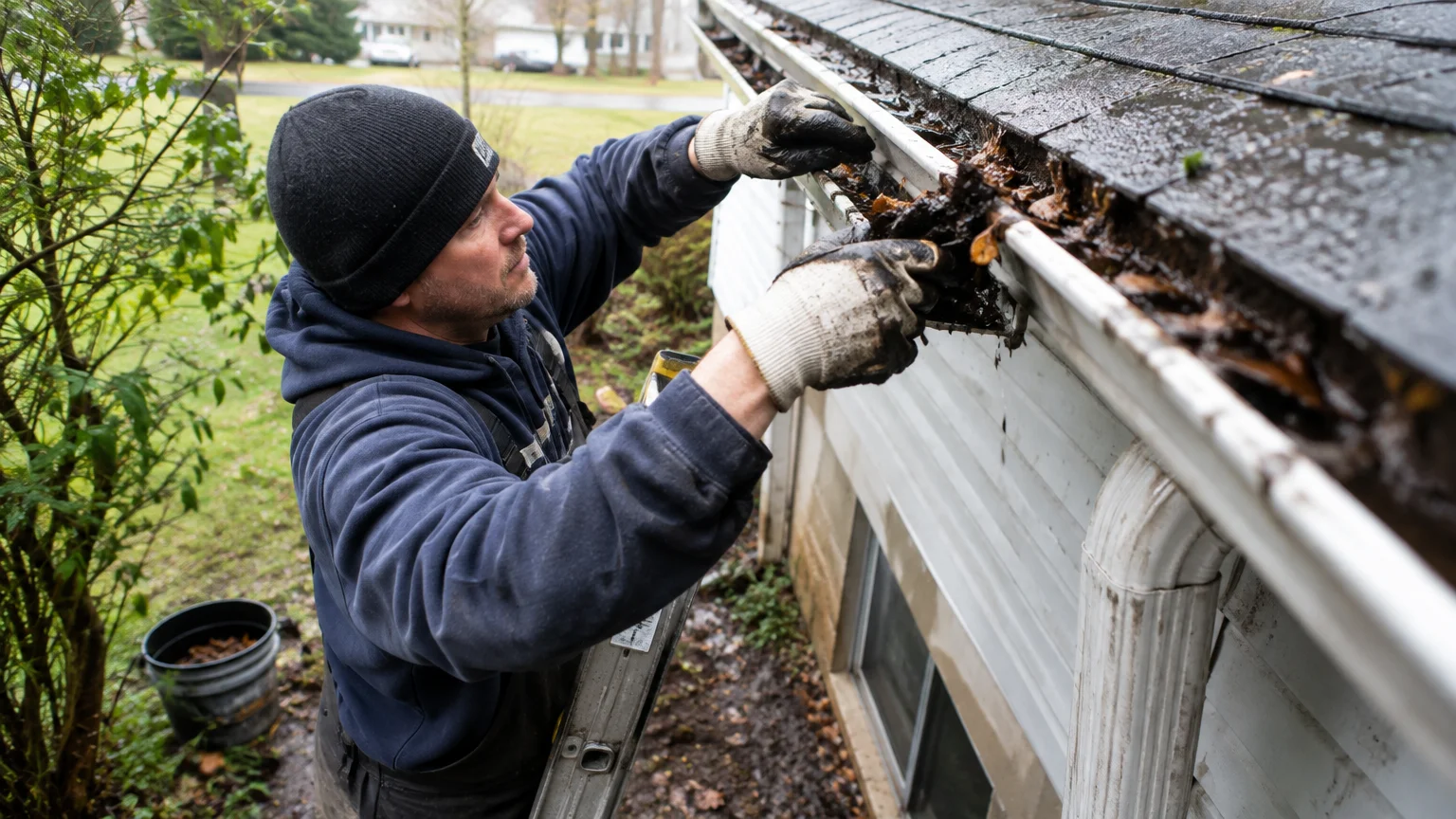
Gutter cleaning removes leaves, pine needles, roof grit, and other debris. It does not repair rotten fascia, failed flashing, loose soffits, or damaged shingles. Soft wood should be treated as a repair concern, not just a cleaning concern.
Sugar Land Pressure Washing can help property owners understand which service fits the problem. Gutter Cleaning Services may solve an active blockage. Roof or exterior work may be needed when water has already damaged the roof edge. A clear inspection helps prevent repeated cleaning without fixing the cause.
How do clogged gutters damage soffits and eaves?
Clogged gutters can damage soffits and eaves by holding moisture under the roof edge. A soffit is the finished surface beneath an eave. Many soffits have vents that help air move through the attic. Backed-up water can stain the soffit, loosen its finish, or reach the vents.
How trapped moisture affects ventilation and painted surfaces
Moisture can make soffit panels swell or sag. Wood soffits may rot, while vinyl or aluminum panels may loosen or bend. Paint may peel because water gets behind the coating. Damp areas may also support mold when air flow is poor.
Blocked water can enter through seams, nail holes, or small gaps. It may then affect the fascia, rafter ends, and attic edge. These places can be hard to see from the ground. A stain should not be ignored just because the attic looks dry during one visit.
Warning signs that soffit repairs may be needed
Look for separated panels, dark marks, sagging sections, insect activity, and missing vent covers. A musty smell near the attic edge may also suggest damp materials. Birds and insects can enter through damaged soffits and create more trouble.
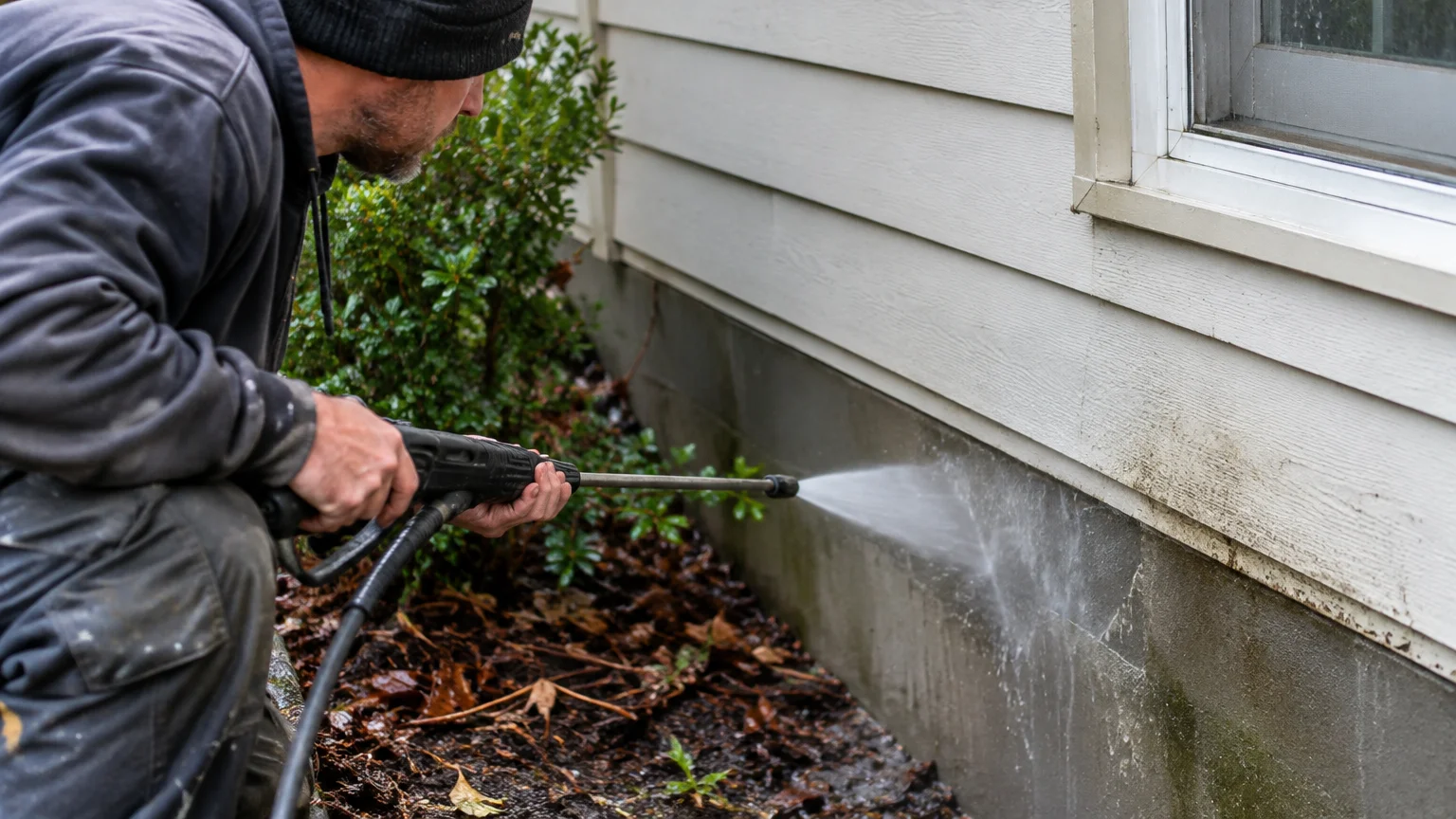
Pressure washing is not a cure for rotten soffits. High pressure may force water into gaps or harm fragile panels. Gentle exterior cleaning can remove surface dirt when the material is sound. House Washing Services may help when the surface is strong but dirty.
Can clogged gutters cause leaks inside the home?
Yes, clogged gutters can help cause indoor leaks when overflow reaches the roof edge, wall, or flashing. Water may travel behind siding before entering a wall cavity. It can then appear around ceilings, windows, trim, or upper-floor walls.
How water travels behind siding and into wall cavities
Water does not always move straight down. It can follow wood, roofing layers, wires, and framing until it finds a gap. A small opening near the roof edge may let water enter during heavy rain. Insulation can hide the moisture for some time.
This is why a ceiling stain does not always show the exact leak spot. The stain may be below the source. The real problem may be near the gutter, roof edge, or flashing. A roof worker may need to check several connected areas.
Interior warning signs of roof-edge water intrusion
Watch for yellow or brown ceiling marks, peeling paint, damp drywall, soft trim, and musty odors. Repeated stains after rain are especially important. Check rooms below roof valleys, upper walls, and windows near the gutter line.
Indoor water damage can continue after the gutter is cleaned. Cleaning may stop the overflow, but wet drywall, insulation, or framing may still need care. Do not cover a stain with paint until the water source is found and the area is dry.
Can overflowing gutters cause foundation water problems?
Overflowing gutters can cause foundation water problems when roof runoff lands beside the home. Soil may become soaked, and water can collect near foundation walls. Downspouts that end too close to the building can make the issue worse.
How concentrated runoff affects soil around the foundation
A roof sends water toward its edges during a storm. Gutters and downspouts should carry that water to a safer place. When the system is blocked, water falls in one narrow area and may wash away soil near the foundation.
Repeated saturation can stress basement walls and crawl-space areas. It may also wash away mulch, expose roots, and create muddy paths. In homes with basements, damp walls or a musty smell can signal a drainage concern.
Why downspout discharge matters after gutter cleaning
Cleaning the gutter is only part of the job. The downspout must also carry water without a blockage. Its outlet should direct water away from the foundation. It should not send water toward a neighbor’s property or a walkway.
Homeowners can check for a clear stream during light rain from a safe place. They should not climb an unstable ladder or reach under heavy debris. If water still pools near the home, a drainage worker may need to check the soil, slope, extensions, or underground lines.
What other problems can clogged gutters create?
Clogged gutters can create pest, mold, landscape, and winter problems. Wet debris gives insects and small animals a place to hide. Overflow can stain siding, harm plants, and wash soil from beds near the home.
Pest nests, mold growth, and landscape erosion
Leaves packed inside a gutter can hold moisture for days. Birds, wasps, and rodents may use the debris as nesting material. Damp wood near the roof edge may also attract insects that favor decay.
Mold may grow on wet surfaces, though a dark stain does not always prove mold. Do not disturb unknown growth without proper protection. Surface cleaning may remove dirt, but it cannot correct the water source.
Landscape erosion is another common result. Falling water can cut channels into soil and splash mud onto siding. A working downspout, suitable extension, and stable soil can help limit this wear.
How seasonal freezing can lead to ice dams and heavier damage
In cold parts of the United States, trapped water can freeze inside gutters and at roof edges. An ice dam is a ridge of ice that blocks melting snow from leaving the roof. Water may then move beneath shingles and into roof materials.
Ice dams can have several causes. These include heat loss, snow cover, poor air flow, and blocked drainage. Cleaning gutters keeps the drainage path open, but it does not solve every ice problem. Do not chip ice with tools, use open flames, or climb a snowy roof.
How can homeowners prevent clogged gutter damage?
Homeowners can prevent much damage with regular checks, safe cleaning, and quick repairs. The right schedule depends on nearby trees, roof shape, storms, and debris. Check gutters before heavy rain seasons and after major leaf fall.
A practical inspection and cleaning schedule
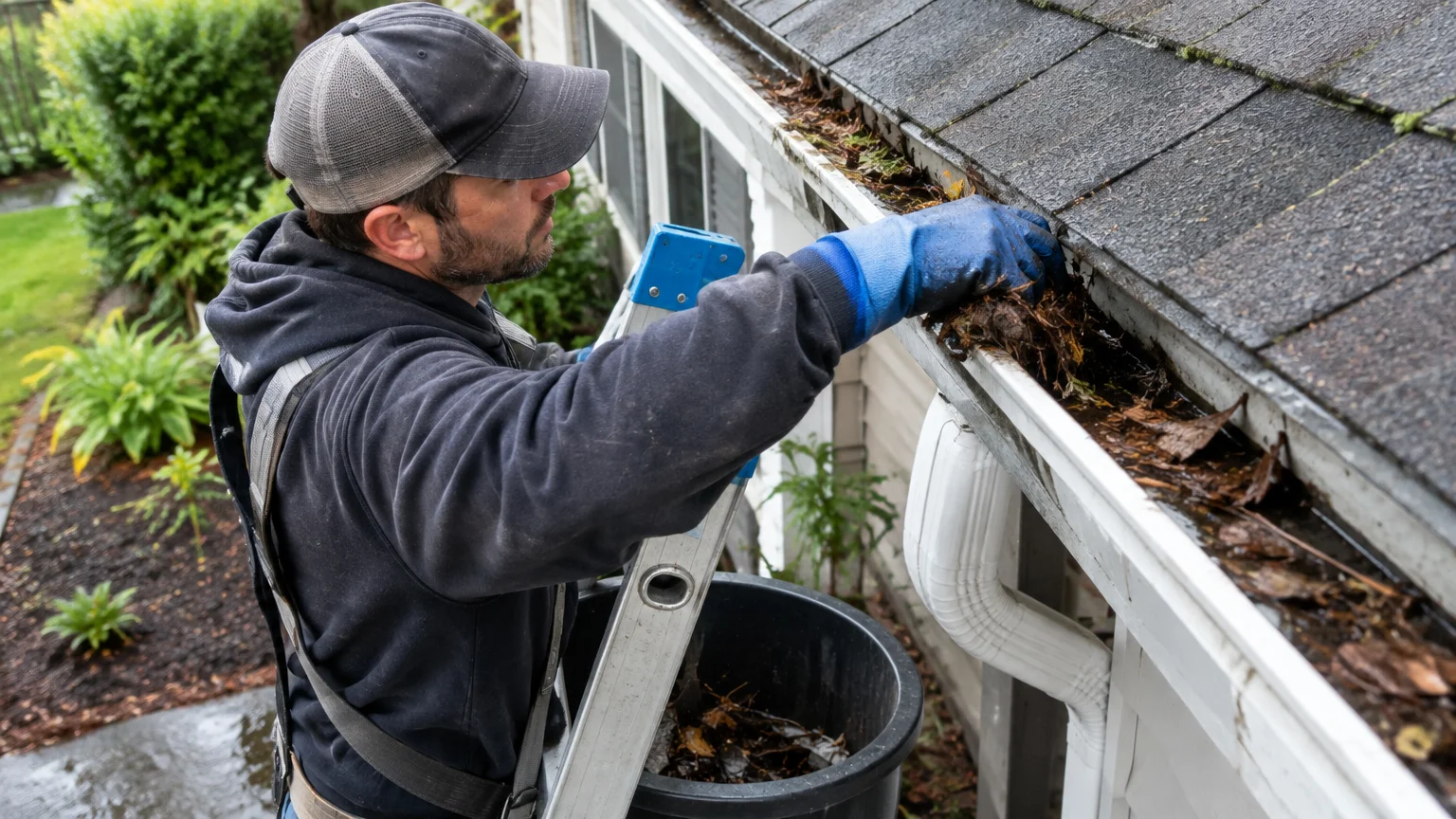
A homeowner does not need a professional for every basic check. From the ground, look for sagging sections, visible plants, overflow marks, and disconnected downspouts. On a low, stable section, a capable adult may remove debris with safe tools. Ladders still require great care.
A simple routine includes:
- Check gutters and downspouts after heavy storms.
- Remove visible leaves only when the work is safe.
- Watch for water spilling over the front edge during rain.
- Look for stains, soft wood, loose panels, and peeling paint.
- Confirm that downspouts send water away from the foundation.
- Arrange repairs when cleaning does not stop the warning signs.
Gutter guards may limit large debris, but they do not remove the need for checks. Pine needles, roof grit, seeds, and small bits can still collect on or below the guard. Gutter Guard Cleaning may be needed when water flow slows.
When to call a professional for cleaning, repairs, or both
A professional is a better choice when gutters are high, the roof is steep, access is poor, or damage is visible. Help is also wise when you see soft fascia, loose soffits, indoor leaks, or foundation water. The work may require more than removing leaves.
Sugar Land Pressure Washing serves property owners and nearby areas. These areas include First Colony, Telfair, Stafford, Missouri City, Richmond, Rosenberg, and other local communities. The team can help identify whether the next step involves Gutter Cleaning Services, roof care, house washing, soft washing, or work by another qualified trade.
Cleaning rain gutters early is usually simpler than waiting for damage to spread. Exterior cleaning can also help remove dirt from sound siding after the water problem is fixed. Always repair loose or soft materials before washing them.
Frequently Asked Questions
How often should gutters be cleaned?
Most homes need checks during spring and after autumn leaf fall. Local conditions can change that schedule. Homes near tall trees may need more attention. Inspect after strong storms as well. Overflow, visible debris, or stains may mean service is needed sooner.
Can gutter cleaning stop fascia rot?
Cleaning can stop new overflow, but it cannot reverse wood that has already rotted. Sound fascia may dry and stay useful after the blockage is removed. Soft, cracked, or sagging wood needs a closer inspection. The gutter may need removal before the board can be repaired.
Can clogged gutters damage a roof?
Yes. Water can back up beneath shingles or run behind the gutter. Over time, it may affect decking, underlayment, flashing, and nearby wood. Roof stains, loose shingles, or indoor leaks call for a roof inspection, not cleaning alone.
Do gutter guards prevent all clogs?
No. Gutter guards can limit large leaves, but small debris may collect on top or pass through openings. Pine needles and roof grit can slow water flow. Guards still need checks and occasional cleaning, especially near trees or after severe weather.
When should a homeowner avoid DIY gutter cleaning?
Avoid the task when the roof is steep, the gutter is very high, the ladder is unsafe, or damage is visible. Seek help when electrical lines, ice, heavy debris, or indoor leaks are nearby. Safety matters more than finishing quickly.
Key takeaways
- Clogged gutter damage often begins at the roof edge.
- Fascia and soffit rot cannot be fixed by cleaning alone.
- Overflow can send water behind siding and toward foundations.
- Downspouts must discharge water away from the home.
- Regular checks help find problems before repairs grow larger.
Conclusion
Clogged gutters can affect fascia, soffits, roof edges, walls, landscaping, and foundations. Early cleaning may restore water flow, but soft wood, loose panels, stains, and indoor leaks point to a wider problem. A safe inspection helps separate simple upkeep from needed repair.
Sugar Land Pressure Washing helps property owners make that choice with practical gutter and exterior care. Property owners in Sugar Land can Contact us today to arrange the next step for your property.
If you are not sure what you are dealing with, it is worth having someone look at it before it turns into a bigger job. Get in touch with Sugar Land Pressure Washing today and we will tell you where you stand.